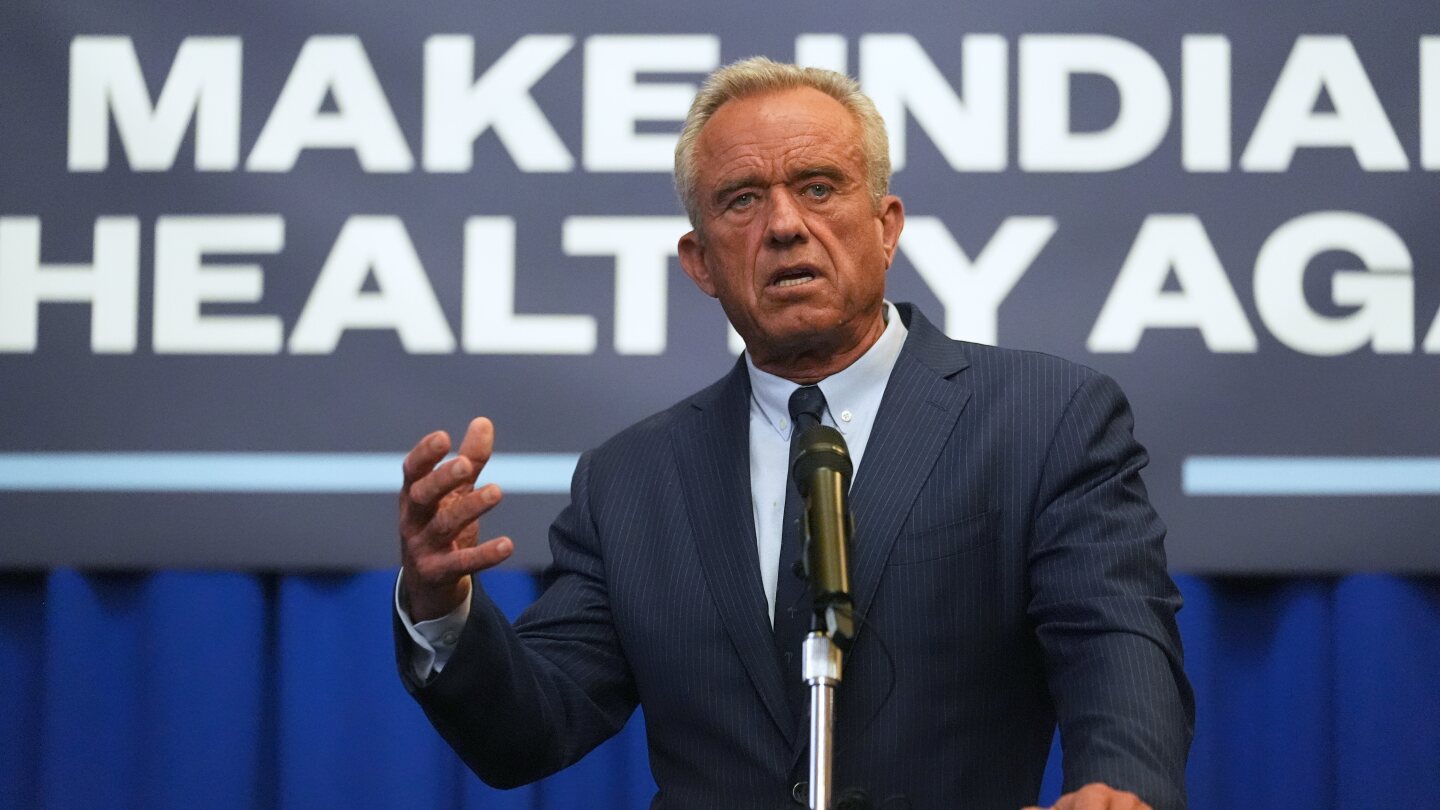
Decoding Kennedy’s Response: What Anti-Vaccine Allies Really Hear Amid the Measles Crisis
As measles cases surge across multiple U.S. states, Robert F. Kennedy Jr.’s controversial statements on vaccines have amplified tensions in the public health debate. The environmental lawyer and prominent vaccine skeptic’s recent remarks, framed as concerns about pharmaceutical influence, are being embraced by anti-vaccine groups despite contradicting scientific consensus. This development complicates containment efforts as health officials warn the current outbreak could become the worst in decades.
The Measles Resurgence and Kennedy’s Polarizing Rhetoric
The Centers for Disease Control and Prevention (CDC) has reported over 120 measles cases across 17 states in 2024 – a threefold increase compared to the same period last year. Most cases involve unvaccinated children in communities where vaccine skepticism has taken root. Against this backdrop, Kennedy’s claims about vaccine risks and his calls for “informed consent” have gained fresh traction.
“When Kennedy speaks about ‘corrupt relationships’ between regulators and drug companies, it validates the deepest suspicions of vaccine-hesitant parents,” explains Dr. Alicia Chen, a public health sociologist at Columbia University. “His messaging bypasses scientific arguments and taps into broader distrust of institutions.”
Kennedy’s recent statements include:
- Claims that CDC vaccine safety data is “rigged”
- Comparisons between vaccine mandates and “medical apartheid”
- Assertions that measles poses less risk than vaccines
Medical experts universally reject these claims. The measles vaccine, introduced in 1963, has prevented an estimated 56 million deaths globally since 2000 according to WHO data. The CDC maintains that the MMR (measles, mumps, rubella) vaccine is 97% effective after two doses.
How Anti-Vaccine Groups Interpret Kennedy’s Message
Within vaccine-skeptical communities, Kennedy’s rhetoric undergoes what researchers call “selective amplification.” His legal background and family name lend credibility, while his most extreme claims get downplayed. “They hear a civil rights crusader, not a conspiracy theorist,” notes political analyst Mark Delgado.
Parental rights groups have particularly latched onto Kennedy’s framing of vaccine mandates as constitutional issues. At a recent rally in Arizona, mother of three Jenna Holloway told reporters: “He’s the only one speaking truth to power about our right to choose. These outbreaks are being used to scare us into compliance.”
This interpretation persists despite:
- Court rulings upholding school vaccine requirements
- Studies showing unvaccinated children are 35 times more likely to contract measles
- Evidence that vaccine exemptions cluster in affluent, white communities
The Public Health Consequences of Misinformation
Health officials warn that Kennedy’s influence comes at a dangerous time. Measles, one of the most contagious diseases known, can lead to pneumonia, brain swelling, and death. Before widespread vaccination, the U.S. saw 3-4 million cases annually.
“We’re seeing the consequences of declining vaccination rates in real time,” says Dr. Rebecca Shaw, a pediatric infectious disease specialist. “When communities dip below 95% MMR coverage, they lose herd immunity. That’s when imported cases spark outbreaks.”
The current crisis reveals troubling patterns:
- 85% of recent measles patients were unvaccinated or had unknown status
- Outbreak regions overlap with areas of high vaccine exemption rates
- Misinformation spreads 6x faster than factual content on social media
Bridging the Divide: Strategies for Effective Communication
Public health experts emphasize that countering vaccine hesitancy requires understanding its roots. “These parents aren’t anti-science – they’re overwhelmed by conflicting information and fearful for their children,” explains communication researcher Dr. Eli Rosenberg.
Effective approaches include:
- Having trusted community members share vaccine-positive stories
- Providing transparent data on both risks and benefits
- Addressing legitimate concerns about medical transparency
Some health systems are experimenting with “vaccine ambassadors” – parents who once hesitated but later vaccinated their children. “No pamphlet can compete with a neighbor’s story,” says Chicago pediatrician Dr. Maria Gutierrez, who helped develop such a program.
The Road Ahead: Policy, Perception and Public Safety
As outbreaks continue, states are reevaluating vaccine exemption policies. New York eliminated religious exemptions after its 2019 measles outbreak, while other states are considering similar measures. However, legal experts caution that restrictive policies may backfire by fueling defiance.
The ultimate challenge remains communication. “We need to separate the vaccine debate from culture wars,” argues Dr. Chen. “When immunization becomes political identity, facts stop mattering.”
For health professionals, the immediate priorities are clear: contain current outbreaks through aggressive contact tracing and boost routine childhood vaccination rates. But the larger battle – rebuilding trust in scientific institutions – will require sustained effort across multiple fronts.
Concerned about measles in your community? Contact your local health department to verify your family’s vaccination status and learn about free immunization clinics.
See more WebMD Network


